GOMIN / UV RESINS & RAW MATERIALS
What Is GMS-3323D?
GMS-3323D is a trifunctional, 100 % solids polyester acrylate oligomer for UV wood white paint and UV wood primer: 300–1,000 mPa·s @ 25 °C — no warming, no solvent, normal liquid dosing — with extremely low curing shrinkage and odor-free handling before and after cure.
On the manufacturer's Technical Data Sheet the product name appears as Netting polyester resin (a Chinese trade name meaning low-odor polyester resin), with the product code GMS-3323D. In international sourcing it is commonly looked for as low-odor polyester acrylate, odor-free polyester acrylate, polyester acrylate for UV wood coating and UV white paint resin. All of these refer to this single grade.
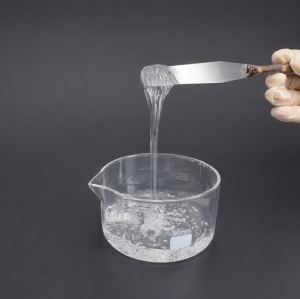
Physically it is a thick, transparent liquid. The five values above are the basic specification used for incoming quality control and for comparing this grade against other UV oligomers; packaging and shelf life are listed in the specification table below.
Why Are UV Wood White Coatings Hard to Balance?
White UV wood coatings are hard to balance. A heavy TiO₂ load scatters the UV light needed for through-cure, so a filled film cures hard on top and stressed underneath; shrinkage then concentrates stress at the wood interface and at the edges. Because white is the finish the customer sees, any yellowing and any residual odor show up immediately. These are general behaviours of highly filled UV white systems, not a claim about one grade.
The TDS positions GMS-3323D against these problems, listing extremely low curing shrinkage, odor-free behaviour before and after curing, excellent adhesion, outstanding yellowing resistance, low viscosity, good leveling and good wetting of pigments and fillers.
| Feature stated in the TDS | Formulation problem it addresses | Where it is most relevant |
|---|
| Completely odor-free before and after curing; excellent adhesion | Odor complaints on the coating line and in finished goods; adhesion loss on coated wood | White topcoats and primers for indoor wood products |
| Extremely low curing shrinkage | Brittleness and adhesion loss caused by cure shrinkage in a filled white film | High-build white topcoats where shrinkage stresses cause cracking |
| Outstanding yellowing resistance | Colour drift in white and light-colour finishes | White wood furniture, panels and decorative surfaces |
| Low viscosity, good leveling, good wetting of pigments and fillers | Poor dispersion, orange peel and high viscosity in highly filled white systems | UV wood white paint and UV wood primer |
Actual yellowing of a finished white film also depends on the photoinitiator package and the cure dose. Confirm the complete system on your own line before scale-up.
Where GMS-3323D Fits
| Application | What the film has to survive | What this resin contributes |
|---|
| UV wood white paint | A high TiO₂ load, a thin film, and wood or MDF that moves with humidity, without cracking or losing edge adhesion | Extremely low curing shrinkage; good wetting of pigments and fillers; good leveling, as listed in the TDS |
| UV wood primer | Bonding to sanded wood, MDF and veneer, then accepting a topcoat without lifting | Excellent adhesion, low viscosity and good leveling, as listed in the TDS |
| Shrinkage control in a filled system | An existing white or pigmented coating that is too brittle or losing adhesion at the edges | Used as a partial replacement for low molecular weight monomer, it addresses shrinkage at the same application viscosity |
| Low-odor interior wood parts | Furniture and fitments that reach the end user soon after coating, where residual acrylic smell is a complaint | Odor-free before and after curing, as stated in the TDS |
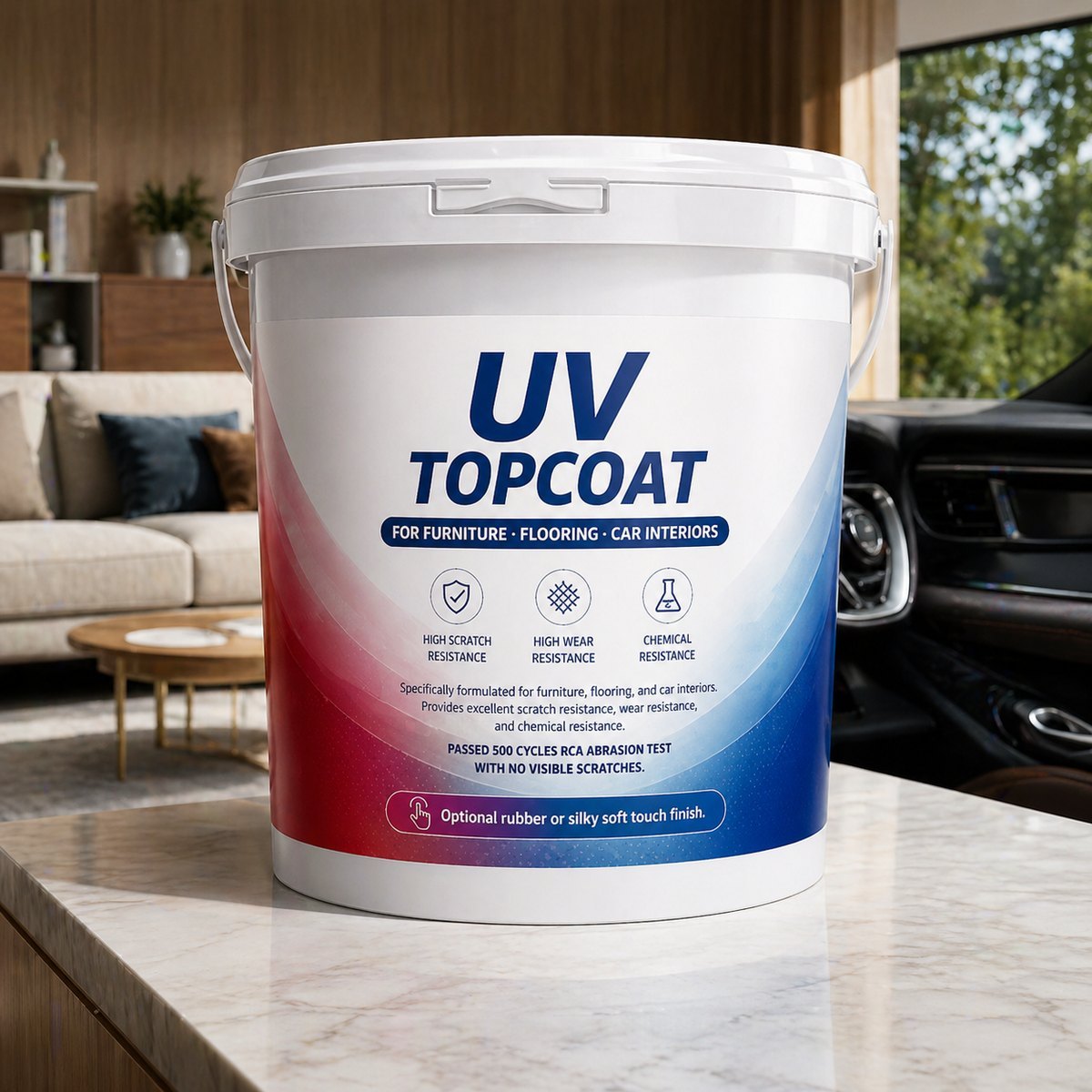
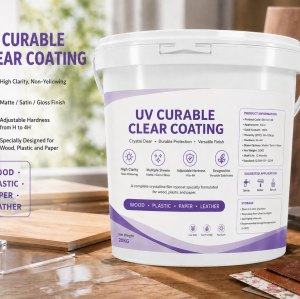
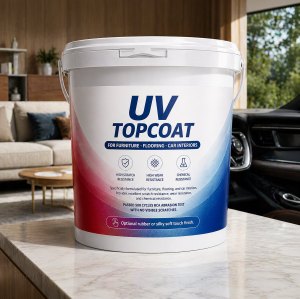
The pail shown is a finished coating in a downstream wood-finishing context, not the GMS-3323D resin raw material.
Where it is NOT the answer
- Elastic veneer topcoats that must follow wood movement — that is a job for an elastic aromatic urethane acrylate such as GMS-6136, not for a trifunctional polyester network.
- Colour-critical exterior films where the resin itself must carry long-term light stability — discuss an aliphatic grade such as GMS-6050A with our team instead.
- Systems that need viscosity far below 300 mPa·s without any reactive diluent — this grade is free-flowing, but not water-thin.
Our technical team will tell you honestly if your application points to a different chemistry rather than force a trial.
Technical Specifications
The table below is the single authoritative parameter set for this grade. It matches the specification panel above this description exactly.
| Parameter | Value | Remark |
|---|
| Product code | GMS-3323D | Single grade; see the naming note above |
| Product type | UV-curable resin (oligomer) | Not a reactive diluent or a finished coating |
| Chemistry | Polyester acrylate (trifunctional) | Oligomer backbone for UV-curable wood systems |
| Appearance | Thick, transparent liquid | Visual |
| Functionality | 3 | Confirm cure response in your own formulation |
| Solid content | 100 % (solvent-free) | No solvent content declared in the TDS specification field |
| Viscosity @ 25 °C | 300–1,000 mPa·s | Ambient handling, no drum warming needed |
| Acid value | ≤ 4 mg KOH/g | Key incoming-QC parameter for resin acceptance |
| Curing shrinkage | Extremely low | Qualitative statement in the TDS product features; no numerical value published |
| Odor | Odor-free before and after curing | Qualitative statement in the TDS product features; no odor rating published |
| Applications | UV wood white paint; UV wood primer | Listed application areas in the TDS |
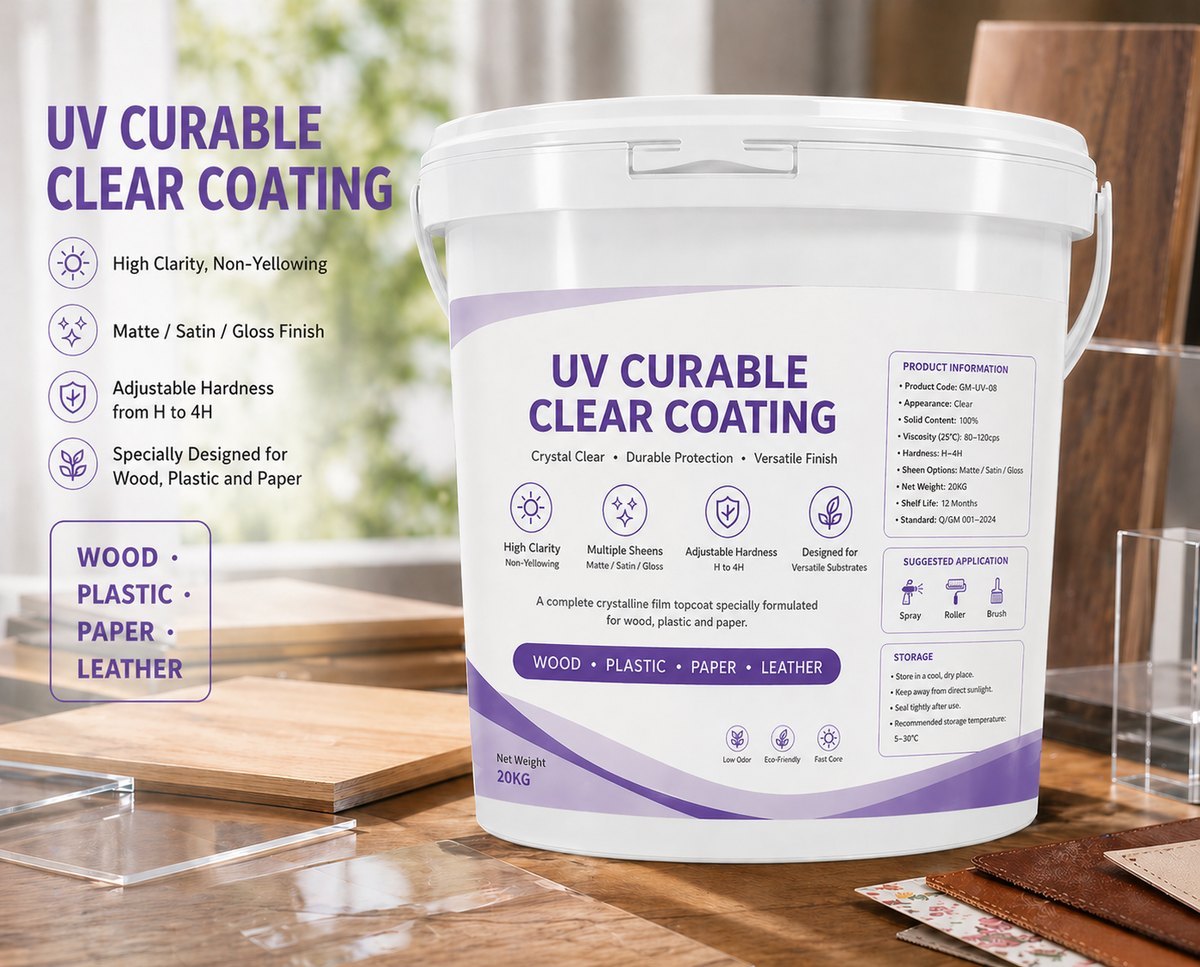
| Packaging | 20 kg black plastic pail | Black packaging blocks UV exposure during storage |
| Shelf life | 12 months at 5–35 °C, avoid direct sunlight | Keep the container closed |
Values reproduced exactly from the GMS-3323D Technical Data Sheet issued by Dalian Gomin Special Coating Co., Ltd. No value has been extrapolated, rounded up or supplemented with data from other grades. For lot-specific values, request the current TDS revision.
The TDS does not publish numerical VOC, density, colour, refractive index, glass transition temperature or shrinkage values. Request and verify those parameters separately if they are part of your qualification criteria.
Viscosity is specified at 25 °C. Viscosity falls steeply with temperature, so do not compare it directly against grades quoted at 60 °C.
Formulation & Processing Guidance
This grade needs no warming, no solvent and only normal liquid dosing, so formulation work goes into the two things white UV coatings are judged on: through-cure and stress. This is a starting point, not a production formula.
Step 1 — Start with the shrinkage problem
Decide how much shrinkage you need to remove, then set the loading. As the main oligomer it carries the film; as a partial replacement for monomer it fixes an existing formulation. The number that matters is the stress left in the cured film, not the viscosity cup reading.
Step 2 — Let the wetting do the work
Good pigment and filler wetting lets you raise the TiO₂ or extender load before the mill base stops flowing. Add a dispersant only if the mill base needs one, and judge gloss and hiding on a draw-down, not on the paste.
Step 3 — Through-cure is a photoinitiator decision
TiO₂ scatters UV, so the bottom of a white film cures after the top. Choose a photoinitiator package designed for pigmented films and confirm the dose on your own line — hard on the surface and soft underneath passes a thumb test and fails an adhesion test a week later.
Recommended loading is application-specific. The TDS does not fix a dosage figure for this grade, and we prefer not to guess one for you. Tell us your substrate, film thickness and TiO₂ loading, and our technical team will come back with a starting range and a reference formulation.
Packaging, Documentation & Quality Control
Batch release and order terms
Viscosity, solid content and acid value are checked on every batch against the TDS values as release criteria. MOQ, palletisation, lead time, Incoterms and shipping classification are confirmed per inquiry because they depend on destination and order size; they are not fixed values in the TDS.
Documents and samples on request
- Full Technical Data Sheet (PDF), the source for every number on this page
- Safety Data Sheet (SDS) for handling, storage and EHS review
- Sample of the current production lot for laboratory qualification
- Lot-specific data and incoming-QC limits: viscosity at 25 °C, acid value, appearance
- Quotation, MOQ, lead time, palletisation and Incoterms for your destination
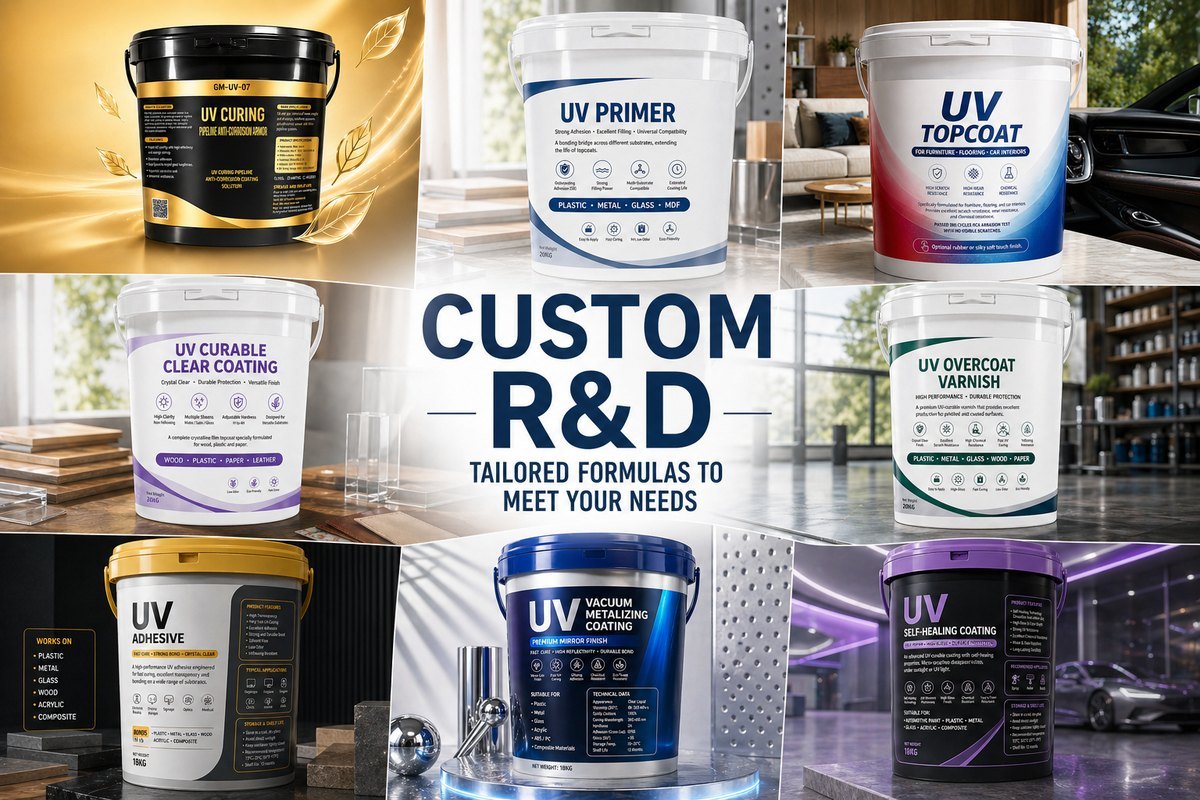
Browse the full UV Resins & Raw Materials range to compare neighbouring grades.
Frequently Asked Questions
What is GMS-3323D used for?
According to the manufacturer's Technical Data Sheet, GMS-3323D is used in UV-curable wood white topcoats (UV wood finish white paint) and UV wood primers. No other applications are listed in the TDS; suitability for other substrates or coating systems must be validated in your own trials.
Is GMS-3323D really odor-free after curing?
The Technical Data Sheet describes the resin as completely odor-free both before and after curing. This is the manufacturer's product description; no odor test method or numerical odor rating is published in the TDS. We recommend confirming it on your own cured film before approving the grade for production.
What is the viscosity and solid content of GMS-3323D?
Viscosity is 300–1,000 mPa·s measured at 25 °C, and solid content is 100 % (solvent-free). Acid value is no more than 4 mg KOH/g and functionality is 3. All four values are reproduced from the TDS and are checked on every batch as release criteria.
Can I compare 300–1,000 mPa·s with a resin quoted at 60 °C?
No. Viscosity falls steeply with temperature, so a grade quoted at 60 °C will read far higher at room temperature. GMS-3323D is specified at 25 °C and stays free-flowing under ambient conditions, which means no drum warming and no heated dosing lines in your plant.
How does low curing shrinkage help a UV white paint?
A UV film shrinks as it cures, and a white paint carries a heavy TiO₂ load that locks much of that shrinkage in as internal stress. If the stress exceeds the adhesion at the wood interface, the film cracks or lifts at the edges. The TDS lists extremely low curing shrinkage as a feature of this grade.
Is GMS-3323D an oligomer or a reactive diluent?
It is a trifunctional polyester acrylate oligomer with 100 % solid content and no solvent. At 300–1,000 mPa·s @ 25 °C it is low enough in viscosity to reduce the reactive diluent in your formulation, but it contributes film-building crosslink density rather than acting simply as a thinning agent.
Is "Netting polyester resin" the same product as GMS-3323D?
Yes. The Chinese trade name on the TDS translates as low-odor or odor-free polyester resin, and it is the same single grade as product code GMS-3323D. Buyers also search for it as low-odor polyester acrylate, odor-free polyester acrylate and UV white paint resin. All of these names refer to this one product.
Polyester acrylate or urethane acrylate — which chemistry for my wood coating?
Urethane acrylates bring elastomeric toughness and adhesion, while polyester acrylates bring hardness, fast cure response and pigment wetting. For white paints and primers on wood and MDF, GMS-3323D is the natural starting point. For elastic veneer topcoats, our GMS-6136 is the better fit.
Does the TDS publish VOC, density or a numerical shrinkage value?
No. The TDS does not publish numerical VOC, density, colour, refractive index, glass transition temperature or shrinkage values. It describes curing shrinkage qualitatively as extremely low. Request and verify any of these parameters separately if they are part of your qualification criteria.
What packaging, shelf life, sample and documentation can I request?
Standard packaging is a 20 kg black plastic pail with a 12-month shelf life at 5–35 °C, kept closed and away from direct sunlight. You can request the full TDS, the SDS, a sample of the current production lot, lot-specific QC limits and a quotation with MOQ, lead time and delivery terms.
Request a Quote, a Sample or the Full TDS
Tell us what you are formulating and what is failing in the current system. A precise brief lets our technical team confirm whether GMS-3323D is the right oligomer and send the relevant documentation instead of a generic brochure.
Include these six points in your inquiry
- Substrate and end product, for example white-coated wood furniture or wood panels
- Coating layer: UV wood white paint or UV wood primer
- Current resin system and the problem to solve: shrinkage, brittleness, adhesion, leveling, yellowing or odor
- Curing equipment: lamp type and line setup
- Target properties and your test methods
- Estimated monthly volume, delivery country or port, and required documents (TDS, SDS, sample)
Reach us at mesco@mescogroup.com.cn or www.mescocoating.com.
Data Source and Disclaimer
All technical values and product descriptions on this page are taken from the GMS-3323D Technical Data Sheet issued by Dalian Gomin Special Coating Co., Ltd. The manufacturer states that the data are a general description, not a contractual product specification, and accepts no legal responsibility for recommended parameters because conditions of use are outside its supervision. Buyers must validate suitability in their own formulations. Content source reviewed 20 November 2026.