GOMIN Ultra-High Temperature Resistant Coating Series (up to 1800°C) | GM-846 & GM-813
GOMIN Ultra-High Temperature Resistant Coating Series (up to 1800°C) | GM-846 & GM-813
Model
GM-846 / GM-813
Item specifics
Product Type
Ultra-High Temperature Resistant Coating Series
Grades
GM-846 / GM-813
Series Temperature Range
Up to 1800°C (series designation)
GM-846 Temperature Stability
No change at 800°C (GB/T 2423.2)
GM-813 Temperature Resistance
Long-term stability at 1400°C
GM-846 Solid Content
60% (GB/T 1725-79)
GM-846 Viscosity
≥ 70 s (GB/T 1723-79)
GM-813 Density
2.2 g/cm³ (measured)
Recommended DFT
300 µm (GM-846) / 150 µm (GM-813)
Thinner / Cleaner
Organic thinner (GM-846) / Deionised water (GM-813)
Surface Dry Time
≤ 2 h (GB/T 1728-1979)
Full Cure Time
≤ 24 h
Packaging
10 kg/drum (powder + liquid combo / steel drum)
Storage
0°C–40°C, cool and ventilated, away from heat sources
Shelf Life
36 months
Review
Description
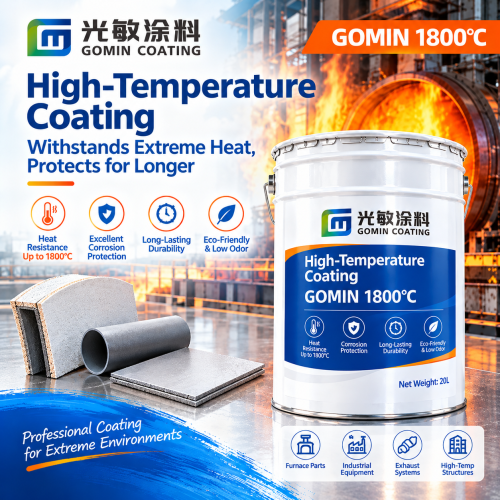
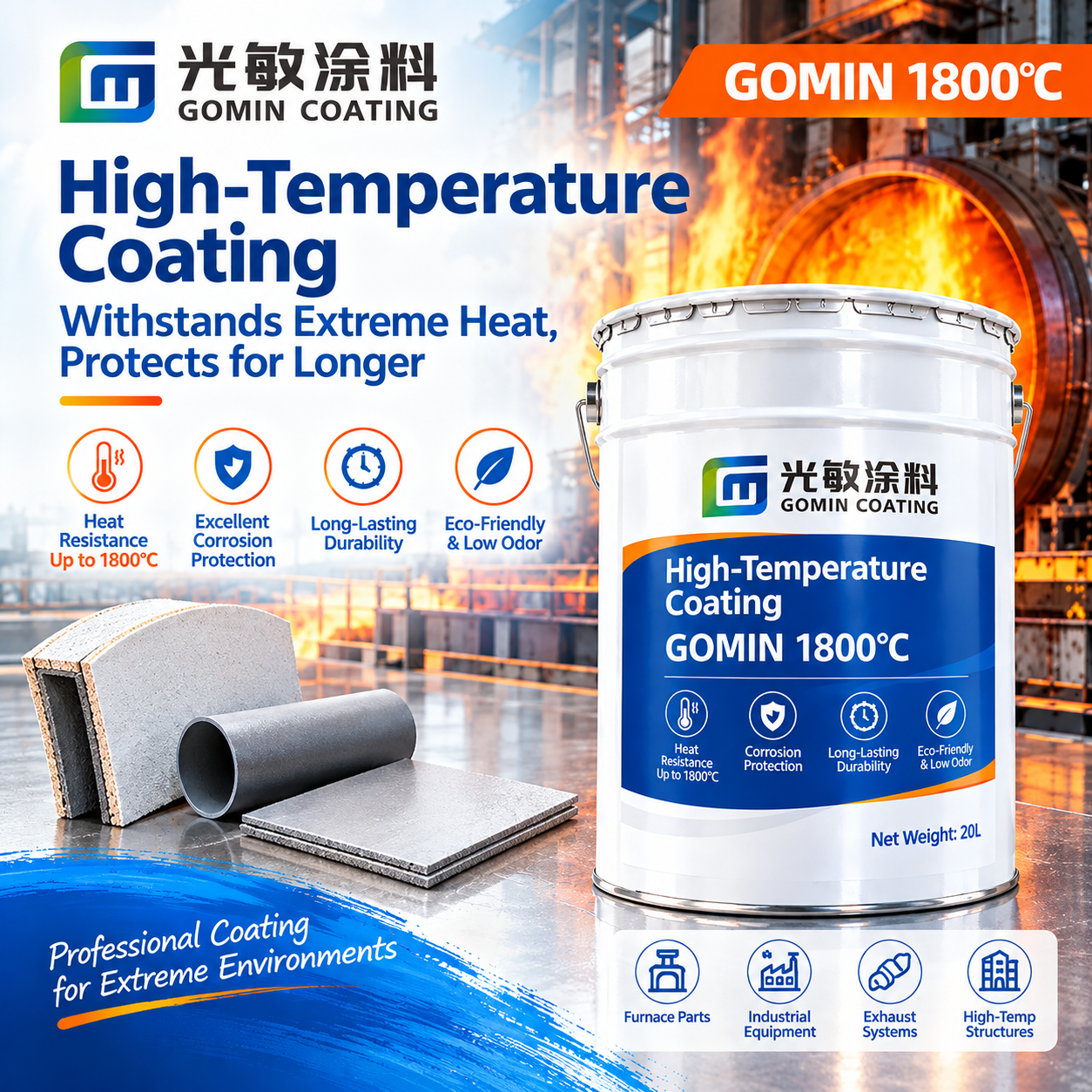
GOMIN Ultra-High Temperature Resistant Series — up to 1800°C
Two Ultra-High Temperature Coatings for Boilers, Chimneys and Chemical Tanks
GM-846 is a rust-tolerant, anti-coking, fireproof and anti-corrosion coating that anchors into the metal and consumes thin rust. GM-813 is a fluorosilicone composite ceramic coating rated for long-term service at 1400°C with 7H hardness. Two grades, one series, built for plant surfaces that have to survive heat and corrosion at the same time.
What Is the GOMIN Ultra-High Temperature Resistant Series?
The GOMIN Ultra-High Temperature Resistant Series is a family of inorganic-hybrid high-temperature protective coatings supplied by Dalian Gomin Special Coating Co., Ltd. Two grades are documented in this product: GM-846, a rust-tolerant anti-coking fireproof anti-corrosion coating, and GM-813, a composite ceramic high-temperature (1400°C) anti-corrosion coating. Both are designed for equipment surfaces that face combined heat, oxidation and chemical attack — boiler shells, chimney and flue ducting, refractory-lined vessels and chemical storage tanks. The series designation covers ultra-high temperature duties up to 1800°C; the rating that applies to your project depends on the grade you select together with the substrate and the process atmosphere, so grade selection always starts from the real service temperature.
Both grades share the same engineering intent. Instead of sitting on the surface as a conventional heat-resistant paint film, they form a dense, mineral-filled barrier that keys into properly prepared steel and keeps working after an ordinary coating would have oxidised, scaled or corroded away.
GM-846 is built on high-temperature chelated silicone resin combined with inorganic compounds, loaded with anti-corrosion flake ceramic powders and inorganic film-forming additives.
Slightly acidic at pH 5, with a dual-curing system and very strong penetration.
Seeps into the gaps between metal crystals to form a chemical anchor structure rather than relying on surface adhesion alone.
Pulls in and encapsulates thin rust or powdered refractory residues, converting them into a stable anti-corrosion complex — so light rust does not have to be removed completely before coating.
Produces a dense, wear-resistant film with outstanding corrosion resistance and heat reflectivity.
Intended for high-temperature environments that are not in direct contact with flame, such as chimneys and boilers.
Thinned with an organic thinner. Recommended dry film thickness 300 µm at approximately 1.5 m²/kg coverage.
GM-813 uses a fluorosilicone-modified resin base doped with yttrium-series rare-earth micro-powders, composite α-ceramic micro-powders and silicon carbide fillers.
Withstands 1400°C with long-term stability in service.
Hardness 7H with a smooth, self-cleaning surface and high impact resistance.
Resists acids, alkalis and organic solvents, which is what makes it suitable for extreme corrosion environments.
Typical duties include chemical storage tanks and surfaces that see highly corrosive friction.
Light green film appearance with a measured density of 2.2 g/cm³.
Thinned with deionised water. Recommended dry film thickness 150 µm at approximately 2.0 m²/kg coverage.
Key Features
Chemical anchoring instead of surface adhesion
The dual-curing system penetrates metal crystalline gaps and locks the film in place, so protection continues in areas where a conventional coating would lift or blister.
Built for ultra-high temperature duty
The series is designated for duties up to 1800°C. GM-846 shows no change at 800°C in high-temperature stability testing, while GM-813 holds long-term stability at 1400°C.
Thin-rust tolerance saves preparation time
GM-846 wraps thin rust and powdered refractory residue into a stable anti-corrosion complex, which reduces surface preparation effort on aged steel and refractory linings.
7H hardness with a self-cleaning finish
GM-813 cures to a smooth composite ceramic surface that resists impact, releases deposits and keeps hot equipment easier to clean and inspect.
Resists acids, alkalis and solvents
GM-813 is formulated for extreme corrosion environments; a 30-day liquid media test leaves the coating intact with no change (GB/T 9274-1988).
Long shelf life, simple site logistics
36-month shelf life, 10 kg drums and storage from 0°C to 40°C in cool, ventilated conditions away from heat sources. GM-846 also shows no change after 300 h of weathering exposure (GB/T 1865-2009).
Values above are reproduced from the GOMIN product data and are provided as typical guidance for grade selection. Confirm the final grade against your service temperature, substrate and atmosphere before ordering.
Application and Delivery Parameters
Parameter
GM-846 Rust-Tolerant Coating
GM-813 Composite Ceramic Coating
Thinner / cleaner
Organic thinner
Deionised water
Surface dry time
≤ 2 h (GB/T 1728-1979)
≤ 2 h (GB/T 1728-1979)
Full cure time
≤ 24 h
≤ 24 h
Recommended DFT
300 µm (coverage 1.5 m²/kg)
150 µm (coverage 2.0 m²/kg)
Packaging
10 kg/drum (powder + liquid combo)
10 kg/drum (steel drum)
Storage
0°C to 40°C, cool and ventilated, away from heat sources
Shelf life
36 months
Where the Series Is Used
The two grades cover different failure mechanisms on the same plant, which is why they are specified together on boiler houses, kiln lines and chemical process areas.
Chimneys, stacks and flue-gas ducting that must not corrode or oxidise in hot service (GM-846)
Boiler shells, boiler parts and heat-exchanger surfaces that sit outside direct flame contact (GM-846)
Refractory-lined vessels, where the coating pulls and binds loose powder into the film instead of letting it spall
Chemical storage tanks and process vessels exposed to acids, alkalis and organic solvents (GM-813)
Surfaces under highly corrosive friction or abrasion at elevated temperature (GM-813)
Steel structures in plants where access is difficult and long coating life matters more than initial material cost
Surface Preparation and Application
Surface preparation
Clean and dry the surface, free from oil, rust and brittle layers.
For metal substrates, abrade to St3 grade or sandblast to Sa2.5 grade.
Work to a surface roughness of 25–40 µm — the profile the film keys into.
Application methods
Spraying: airless spray applied with a cross-hatch technique.
Brushing: apply using the cross-brushing method, which is universal across substrates.
Drying and cure
Surface dry within 2 h for both grades (GB/T 1728-1979).
Full cure within 24 h.
Recommended dry film thickness: 300 µm for GM-846 and 150 µm for GM-813. Use the coverage figures above when estimating material.
Mix only what can be applied in one working period. Mixed paint cannot be recycled, so plan quantities against the recommended dry film thickness and the coverage figure for your grade before starting.
Safety Precautions
Operate in a well-ventilated environment and wear protective equipment. Avoid skin contact and do not inhale paint mist.
Store unused paint in a sealed container. Mixed paint cannot be recycled and must be disposed of according to local regulations.
Paint beyond its shelf life must be tested and approved before use.
In case of skin contact, rinse immediately with soap and water. If paint gets into the eyes, seek medical attention.
Store between 0°C and 40°C in a cool, ventilated place away from heat sources. Shelf life is 36 months from manufacture in unopened original packaging.
Frequently Asked Questions
Q1: What temperature can the GOMIN Ultra-High Temperature Resistant Series handle?
The series is designated for ultra-high temperature duty up to 1800°C. Within this product, GM-846 shows no change at 800°C in high-temperature stability testing (GB/T 2423.2), while GM-813 is rated for long-term stability at 1400°C. Share your service temperature, substrate and atmosphere and we will confirm the grade that fits.
Q2: Does GM-846 really tolerate rust on the steel?
Yes, within a defined limit. GM-846 is a thin-rust-tolerant coating: it penetrates the metal, pulls out thin rust and encapsulates it together with powdered refractory residue into a stable anti-corrosion complex. It is not a substitute for removing heavy scale, loose rust or brittle layers.
Q3: What surface preparation is required?
Surfaces must be clean and dry, free from oil, rust and brittle layers. On metal, abrade to St3 grade or sandblast to Sa2.5 grade, achieving a surface roughness of 25–40 µm.
Q4: How is each grade applied?
Both grades can be applied by airless spray using a cross-hatch technique, or by brush using the cross-brushing method. GM-846 is thinned with an organic thinner; GM-813 is thinned with deionised water.
Q5: How thick should the coating be, and how much material do I need?
Recommended dry film thickness is 300 µm for GM-846 at roughly 1.5 m²/kg coverage and 150 µm for GM-813 at roughly 2.0 m²/kg coverage. Both grades reach surface dry in about 2 hours and full cure within 24 hours.
Q6: How should the coating be stored and supplied?
Store between 0°C and 40°C in a cool, ventilated area away from heat sources, with a 36-month shelf life. GM-846 is supplied as a 10 kg powder-and-liquid combination drum; GM-813 as a 10 kg steel drum.
Request Grade Selection and Samples
Tell us your service temperature, substrate, process atmosphere and part geometry. GOMIN will confirm the right grade, recommend dry film thickness and coverage, and supply samples for your application.