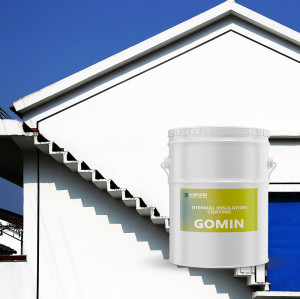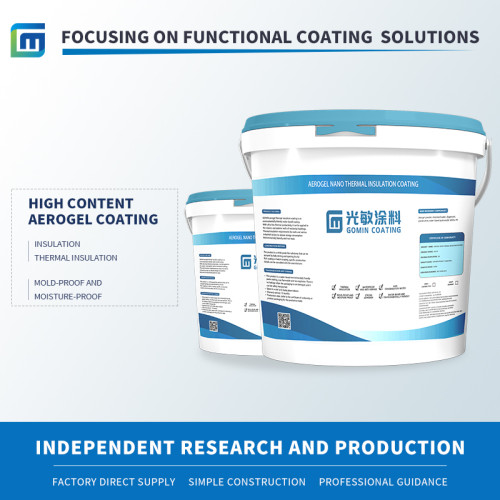
Building Aerogel Coating Thin-layer performance that outperforms traditional insulation
- Model
- Building Aerogel Coating
Review
Description
Building Aerogel Coating
Thin-layer performance that outperforms traditional insulation
Formulated with nano silica aerogel technology. Thermal conductivity 0.029 W/(m·K), adhesion strength 0.7 MPa, density 0.32 kg/L — a 3mm coating delivers insulation equivalent to 50mm of conventional materials. Covers exterior walls, roofs, and interior condensation prevention. Fire class A2. Energy savings ≥30%.
All values measured under standard laboratory conditions (23°C, 50% RH) per the referenced national and international test standards.
* Data based on GB/T 10294, GB 8624, GB 18582, GB/T 9779, GB/T 6750 and internal test reports. Actual values may vary by batch and substrate conditions. Please refer to the official product test report for project specification purposes.
Complete Product Datasheet — All Key Parameters
Parameter
Value
Test Standard
Notes
Thermal conductivity
0.029 W/(m·K)
GB/T 10294
Dry cured coating at 25°C; mineral wool ≈0.040, EPS ≈0.033 for reference
Adhesion strength
0.7 MPa
GB/T 9779
Pull-off test on concrete substrate; no primer required in most applications
Density (wet)
0.32 kg/L
GB/T 6750
Approx. 0.32 kg per litre; applied weight ≈0.3–0.5 kg/m² per mm of thickness
Fire classification
A2 / A
GB 8624
Exterior wall & roof: Class A2; Interior wall: Class A (non-combustible)
VOC content
≤5 g/L
GB 18582
Water-based formulation; national standard limit is 200 g/L
Solar reflectance (TSR)
≥85%
ASTM C1549
White roof/wall variant; reduces surface temperature by 20–35°C vs. bare substrate
Application thickness
3–5 mm
—
Per coat: 1–2 mm; multiple coats to reach design thickness; intervals ≥2 h
Solids content
≥55%
GB/T 1725
High solids ensures efficient build-up per coat with minimal shrinkage
Surface drying time
≤2 h
GB/T 1728
At 23°C, 50% RH; full cure: 7 days
Operating temperature range
−40°C to +150°C
—
Suitable for all climatic zones including extreme cold and hot metal roofs
Freeze-thaw resistance
≥50 cycles
GB/T 9779
No cracking, peeling, or adhesion loss after 50 freeze-thaw cycles
Water contact angle
>110°
—
Hydrophobic surface; water absorption rate <5%; self-cleaning effect
Service life (outdoor)
≥15–20 years
—
Validated by UV ageing and freeze-thaw cycling; no specialist maintenance required
Coverage rate
0.8–1.2 kg/m²/mm
—
Varies with substrate porosity and application method
Application methods
Brush / Roller / Airless spray
—
Water-based, solvent-free; no special equipment required
Each product is engineered for its specific substrate and thermal challenge,
delivering optimum insulation performance in every building location.
3mm coating reduces external surface temperature by 8–12°C and delivers ≥30% energy savings.
Direct application to existing facades — no demolition required. Fire class A2,
weather resistance ≥20 years. Ideal for building energy retrofit and new construction.
High solar reflectance (TSR ≥85%) combined with aerogel conductive resistance delivers a dual insulation
mechanism. Indoor temperature reduction of 5–10°C. Elastic waterproofing integrated.
Compatible with concrete flat roofs, metal sheet roofing, and SBS membranes.
Raises interior surface temperature above the dew point, eliminating condensation at source
and preventing mould growth. Fire class A (non-combustible). VOC ≤5 g/L.
Safe for occupied spaces including hospitals, schools, and residential buildings.
Three application-specific formulations — covering every building element
Exterior Wall Aerogel Insulation Coating
Roof Aerogel Insulation Coating
Interior Wall Aerogel Insulation Coating
All reference values are drawn from GB/T national standards and independent product test reports
to support accurate project specification decisions.
* Reference values sourced from GB/T 17393, GB/T 10294, GB 8624 and product datasheets. Values vary by specific grade and manufacturer.
Whether you are designing a new zero-carbon building or upgrading existing stock,
aerogel coating adapts to the project's constraints without compromise.
Applied directly over clean, dry existing surfaces — concrete, masonry, or painted walls —
with no requirement to remove original cladding. Typical project completion: 7–14 days.
Minimal disruption to occupants. Achieves compliance with China's 65%–75% energy-saving
design standard and qualifies for government retrofit subsidy programmes.
Used alongside external insulation systems or BIPV facades to meet ultra-low energy
building targets (≤55 kWh/m²·year). The thin profile preserves net usable floor area,
reduces facade dead load, and accelerates the building envelope programme
compared to board-and-render systems.
Applied at the precast factory before delivery to site. At 3–5mm thickness,
the coating falls within standard dimensional tolerances of PC panels,
requiring no design modification. Panels arrive site-ready — no secondary
insulation installation needed, reducing on-site programme and labour cost.
Steel and aluminium cladding conduct heat rapidly — uncoated metal roofs can
reach 80°C in summer, driving interior temperatures above 50°C.
Aerogel coating reduces panel surface temperature by 20–30°C, improving
working conditions and reducing air-conditioning energy use by up to 40%.
Conservation requirements often prohibit any visible change to the facade.
At 3–5mm, aerogel coating is effectively invisible at normal viewing distances
and does not alter the building's external appearance, while measurably
improving thermal performance. Suitable for listed buildings and
historic streetscape conservation projects.
Interior wall coating's VOC ≤5 g/L ensures air quality compliance in occupied sensitive
environments. Class A fire rating satisfies GB 50016 for all public building types.
External application supports compliance with GB 50189 Public Building Energy
Efficiency Standard (≥72% energy saving) and contributes to Green Building Star certification.
Six reasons it outperforms traditional insulation
Aerogel coating vs traditional insulation — side-by-side data
Parameter
Aerogel coating (this product)
Mineral wool board
EPS board
XPS board
Thermal conductivity W/(m·K)
0.029
0.036–0.050
0.030–0.040
0.025–0.032
Equivalent insulation thickness
3–5 mm
≥80 mm
≥80 mm
≥60 mm
Adhesion strength
0.7 MPa (pull-off)
Mechanical fixings needed
Adhesive + fixings
Adhesive + fixings
Density
0.32 kg/L (very light)
60–200 kg/m³ slab
15–30 kg/m³ slab
25–40 kg/m³ slab
Fire classification (GB 8624)
A2 exterior / A interior
Class A
Class B1
Class B1 (fire breaks req.)
Application method
Brush / roller / spray — no special equipment
Board fixing + render — multiple trades
Board fixing + mesh + render
Board fixing + render
Retrofit suitability
Apply over existing surface — no demolition
Original cladding removal required
Original cladding removal required
Original cladding removal required
Water resistance
Hydrophobic, contact angle >110°, <5% absorption
Performance degrades significantly when wet
Low absorption
Very low absorption
VOC content
≤5 g/L (water-based)
None (dry board)
Residual blowing agent
Residual blowing agent
Service life
≥15–20 years
10–15 years
10–15 years
15 years
New build · Retrofit · Every building type — one solution
Water-based, solvent-free. Brush, roller, or airless spray application.
Standard decorating contractors can apply the product after a short briefing — no specialist equipment required.
Application conditions: temperature 5–40°C, relative humidity ≤85%, protected from rain for ≥24 hours after application.
Full installation guides and on-site technical support are available from our team — contact us to arrange.
Across residential, commercial, industrial, and public building types — with full technical
support from specification through to post-installation monitoring.
An existing residential estate with no original external insulation faced high summer interior
temperatures and significant winter heat loss. Following application of 4mm exterior wall aerogel
coating, external surface temperature fell by 11°C in summer, interior temperature by 4°C,
and residents reduced air-conditioning running time by approximately 35%.
The project was recognised as a model energy retrofit by the local authority.
The factory's uncoated steel roof reached 78°C surface temperature in summer, driving
workshop temperatures above 50°C and causing repeated heat-related incidents.
Following application of 5mm roof aerogel coating, roof surface temperature dropped to 44°C,
workshop temperature fell by 12°C, and annual air-conditioning energy cost was reduced by
approximately CNY 280,000.
Conservation restrictions prohibited any visible facade alteration, ruling out conventional
insulation board systems. A 3mm exterior wall aerogel coating satisfied the conservation
authority's "no change to facade appearance" requirement while reducing the external wall
U-value from 1.8 to 0.9 W/(m²·K), cutting winter heating energy use by approximately 22%.
Severe condensation on basement and north-facing ward walls was causing persistent mould growth,
compromising the clean environment. A 3mm application of interior wall aerogel coating raised
wall surface temperatures by 5°C — above the winter dew point — completely eliminating
condensation. VOC levels post-application remained below the medical facility air quality standard.
Five steps to a complete aerogel coating system
Technical questions answered — directly and in full
Delivered on 200+ building energy projects
Start your building insulation project
Submit your project details and our technical team will respond within 24 hours with a tailored solution and quotation.